





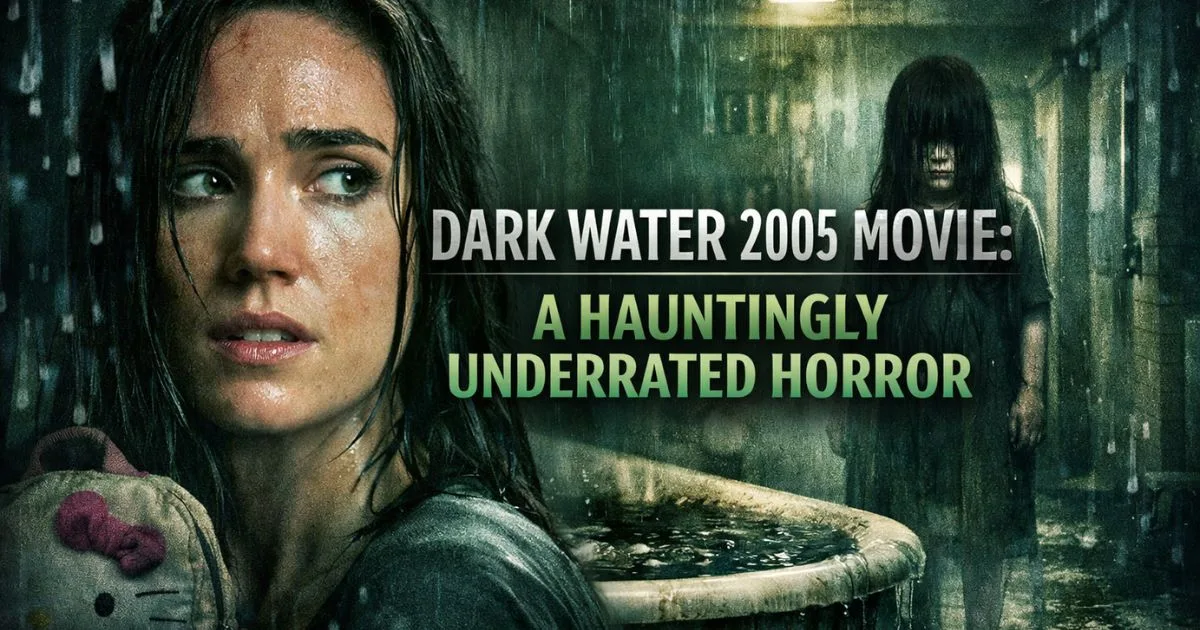
When Dark Water movie arrived in theaters on July 8, 2005, it faced an uphill battle. Following the massive success of The Ring and The Grudge, audiences expected another terrifying J-horror remake filled with jump scares. What they got instead was something far more unsettling, a slow-burn psychological thriller that trades horror for heartbreak.
Directed by Walter Salles and starring Jennifer Connelly in one of her most vulnerable performances, Dark Water 2005 movie earned $49.5 million worldwide but received mixed reviews (47% on Rotten Tomatoes, 5.6/10 on IMDb). Nearly two decades later, this atmospheric ghost story deserves a second look.
What Is Dark Water 2005 Movie About?
Dark Water follows Dahlia Williams (Jennifer Connelly), a recently divorced mother fighting for custody of her six-year-old daughter Cecilia (Ariel Gade). Desperate and financially strained, Dahlia moves into a rundown apartment building on Roosevelt Island in New York City.
Almost immediately, dark water begins leaking from the ceiling. The building manager Mr. Murray (John C. Reilly) and superintendent Veeck (Pete Postlethwaite) refuse to fix it. As the leaks worsen, Dahlia discovers a Hello Kitty backpack that keeps reappearing. Her daughter begins talking to an imaginary friend named Natasha, and ghostly visions plague Dahlia’s already fragile mental state.
The film explores whether the haunting is real or a manifestation of Dahlia’s deteriorating psychological condition as she battles her ex-husband Kyle (Dougray Scott) in court. This ambiguity between supernatural horror and mental breakdown is what sets Dark Water apart from typical ghost movies.
Dark Water 2005 Cast and Crew
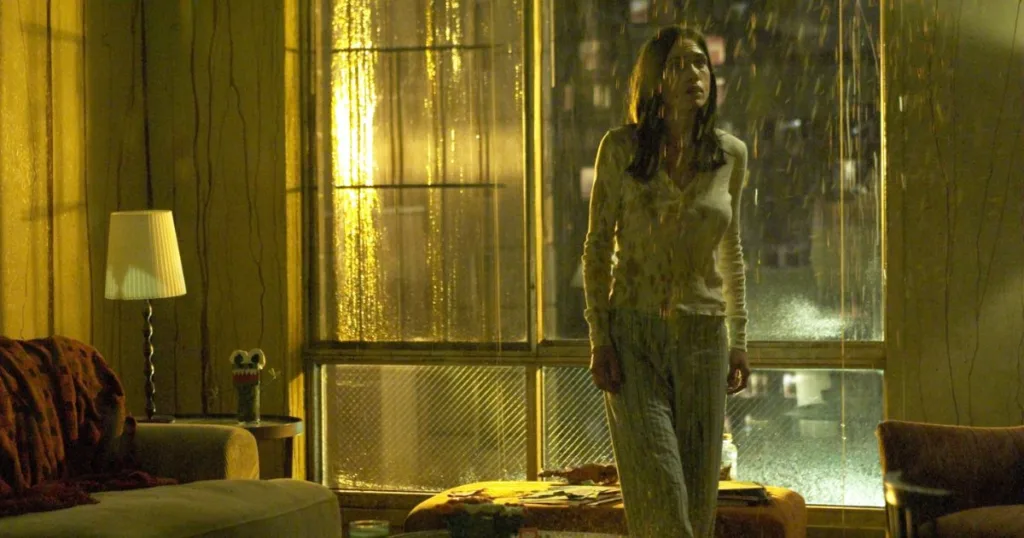
Jennifer Connelly as Dahlia Williams delivers a deeply felt performance. Fresh off her Oscar win for A Beautiful Mind (2001), Connelly brought gravitas to what could have been a standard horror role. At the time of filming, her son was only six months old, giving her an authentic understanding of maternal fear. She turned down a role in House of Wax (2005) to appear in Dark Water.
Supporting Cast:
- John C. Reilly plays the sleazy apartment manager Mr. Murray with perfect sliminess
- Tim Roth portrays Jeff Platzer, Dahlia’s lawyer who provides crucial support
- Pete Postlethwaite gives Veeck the superintendent a grungy Eastern European accent and menacing presence
- Ariel Gade as Cecilia/Ceci Williams
- Dougray Scott as Kyle Williams, the ex-husband
- Perla Haney-Jardine (B.B. from Kill Bill Vol. 2) plays the ghost child Natasha
Director Walter Salles, known for acclaimed films like The Motorcycle Diaries and Central Station, brought an arthouse sensibility to the horror genre. Cinematographer Alfonso Beato created the film’s signature gray-blue palette. Legendary composer Angelo Badalamenti (Twin Peaks, Mulholland Drive) crafted the haunting score.
Screenwriter Rafael Yglesias adapted the story, adding psychological depth to the Japanese original.
Dark Water: Japanese Original vs American Remake
Dark Water 2005 movie is a remake of the 2002 Japanese film directed by Hideo Nakata (who also directed the original Ringu). Both films are based on the short story “Floating Water” from Koji Suzuki’s horror anthology “Honogurai Mizu no Soko kara.”
Key Differences Between Dark Water 2002 and 2005:
The Japanese Dark Water earned $1.4 million worldwide and holds an 84% rating on Rotten Tomatoes. Critics praised its patient, atmospheric approach. The American version expanded the custody battle subplot and emphasized Dahlia’s psychological deterioration.
While Nakata’s version keeps emotional distance from characters to heighten supernatural dread, Salles pulls viewers directly into Dahlia’s perspective. This makes the American remake more emotionally resonant but less traditionally scary. Some fans believe the 2005 version actually surpasses the original by deepening the family drama elements.
The Japanese film focuses on mother Yoshimi Matsubara (Hitomi Kuroki) in a similar custody situation, but maintains minimalist J-horror aesthetics. The American version features more polished cinematography and a bigger budget ($30 million).
Critical Reception and Box Office Performance
Dark Water opened with $9.9 million across 2,657 theaters in the United States. It ultimately grossed $25.5 million domestically and $24 million internationally for a worldwide total of $49.5 million—a modest return on its $30 million budget.
Critical Consensus:
- Rotten Tomatoes: 47% (154 reviews)
- Metacritic: 52/100 (mixed reviews)
- IMDb: 5.6/10 user rating
- CinemaScore: D- (audience grade)
Critics praised Jennifer Connelly’s committed performance and the film’s atmospheric cinematography but criticized its slow pacing and lack of genuine scares. Roger Ebert gave it 2.5/4 stars, acknowledging its craftsmanship while noting it couldn’t escape comparisons to more successful J-horror remakes.
Peter Travers of Rolling Stone called it “a classy ghost story” and praised how it handles psychological fears. Empire magazine described it as “interesting and unsettling, but never terrifying” and suggested viewing it as “a family drama-come-Tale Of The Unexpected rather than a full-on horror.”
Why Dark Water 2005 movie Is Underrated
Despite mixed reviews, Dark Water has aged remarkably well. Modern audiences appreciate slow-burn horror more than in 2005, when jump scares dominated. Here’s why this film deserves reconsideration:
It’s a Character Study First, Horror Second: Unlike many horror films where characters exist only to be scared, Dark Water invests deeply in Dahlia’s emotional journey. The supernatural elements serve the character development rather than overwhelming it.
Maternal Horror Done Right: The film explores themes of abandonment, childhood trauma, and the sacrifices mothers make for their children. The ghost story becomes a metaphor for generational trauma and neglect.
PG-13 Rating That Works: Dark Water proves horror doesn’t need graphic violence or R-rated content to be effective. The restraint actually enhances the psychological impact.
Connelly’s Performance: Jennifer Connelly grounds the entire film with her portrayal of a woman at her breaking point. She makes you believe in Dahlia’s desperation, fear, and love for her daughter.
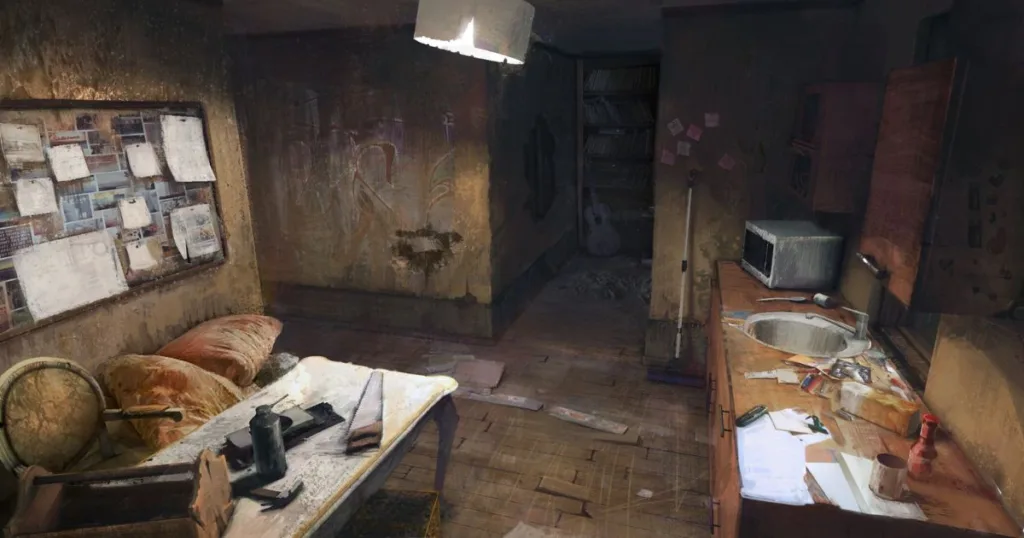
Atmospheric Excellence: The persistent rain, water-damaged apartment, and oppressive Roosevelt Island setting create mounting dread without cheap scares. Water becomes a character itself, dripping from ceilings, flooding floors, symbolizing emotional overflow.
Roosevelt Island: The Perfect Horror Setting
The film’s Roosevelt Island location provides natural isolation despite urban proximity. This narrow island in New York’s East River, connected to Manhattan by a small tram (seen in the opening shot), was once home to asylums and hospitals.
The rundown apartment building with its brutalist architecture and persistent water damage becomes a prison of poverty. This setting grounds the supernatural in socioeconomic reality—horror thrives where society fails vulnerable single mothers and children.
Dark Water Ending Explained (Spoilers)
In the climax, Dahlia discovers that Natasha Rimsky was a neglected child whose parents abandoned her. Left alone, Natasha fell into the building’s water tower and drowned. Her vengeful ghost jealously targets Cecilia because she has a loving mother.
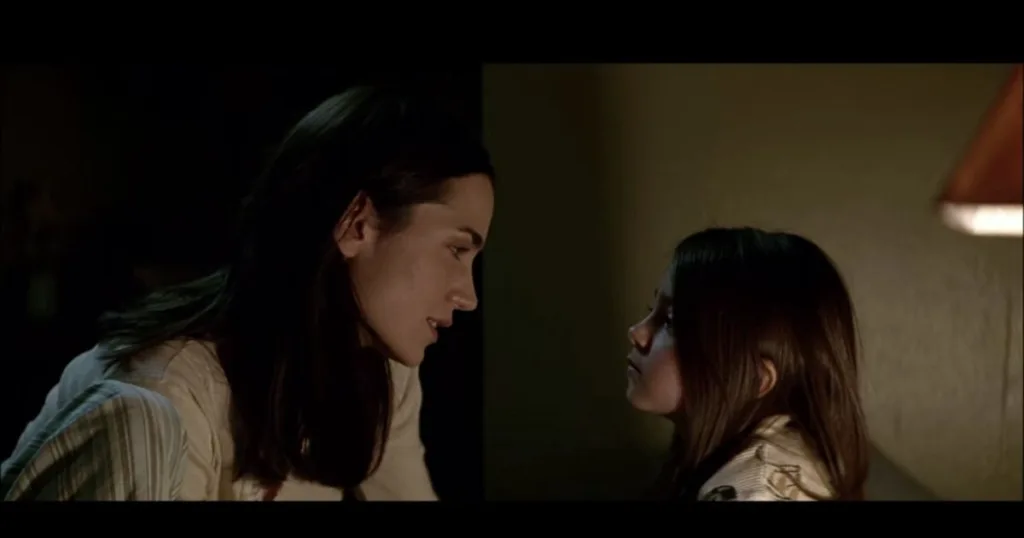
As Dahlia prepares to move out with Cecilia, she realizes the girl in her apartment is actually Natasha’s ghost attempting to drown Cecilia in the bathtub. To save her daughter, Dahlia promises to stay and be Natasha’s mother forever. The apartment floods and Dahlia drowns, sacrificing herself.
Three weeks later, Kyle gets full custody of Cecilia. In the elevator, Dahlia’s ghost appears to Cecilia one last time, braiding her hair and promising “Whenever you need me, I’m here.” The ending is devastating—a mother’s ultimate sacrifice to break the cycle of abandonment.
The film’s ambiguity about Dahlia’s mental state throughout adds another layer. Was the haunting real, or did it represent Dahlia’s own fears of failing her daughter? The film suggests both can be true.
Movies Like Dark Water
If you enjoyed Dark Water’s approach to psychological horror, consider these similar films:
The Ring (2002) – The J-horror remake that started the trend, featuring Naomi Watts investigating a cursed videotape
The Grudge (2004) – Another Hideo Nakata-inspired remake about a cursed house in Tokyo
The Orphanage (2007) – Spanish horror examining maternal love and childhood ghosts with similar emotional depth
Rosemary’s Baby (1968) – Classic psychological horror exploring maternal anxiety and paranoia
The Others (2001) – Atmospheric ghost story starring Nicole Kidman prioritizing mood over scares
Repulsion (1965) – Roman Polanski’s tale of mental instability and bad real estate (frequently compared to Dark Water)
The Babadook (2014) – Modern horror examining how grief and trauma manifest supernaturally for a single mother
White Noise (2005) – Released the same year, exploring supernatural communication and parental grief
Where to Watch Dark Water 2005 movie
Dark Water is available on various streaming platforms, though availability changes by region. The film has appeared on Disney Plus (where it’s categorized under horror), and can be rented or purchased through digital retailers like Amazon Prime Video, iTunes, and Vudu.
Physical Media: Dark Water was released on DVD in two versions. The full-screen DVD includes the 105-minute PG-13 theatrical cut. The widescreen DVD (2.35:1 aspect ratio) includes a 103-minute unrated cut that’s actually shorter than the theatrical version. A Blu-ray was released on October 17, 2006, containing only the theatrical PG-13 version.
There’s also a PlayStation Portable UMD video version for collectors.
The Cultural Legacy of J-Horror Remakes
Dark Water arrived during Hollywood’s J-horror remake wave (2002-2006). Following The Ring’s $249 million worldwide gross, studios rushed to adapt Japanese horror properties including The Grudge, Pulse, One Missed Call, and The Eye.
Dark Water represented both the artistic potential and commercial limitations of this trend. While it showcased these remakes could be thoughtful when helmed by talented directors, its disappointing box office signaled waning audience enthusiasm for J-horror adaptations.
The film’s legacy includes influencing later maternal horror films like The Babadook, Lights Out, and Relic—all examining how supernatural horror can externalize mental health struggles and parenting anxieties.
Is Dark Water Worth Watching?
Yes, if you appreciate:
- Slow-burn atmospheric horror
- Character-driven narratives
- Films that trust audience intelligence
- Jennifer Connelly’s excellent performance
- Psychological ambiguity
- Themes of motherhood and sacrifice
Skip if you prefer:
- Fast-paced horror with frequent jump scares
- Traditional ghost stories with clear supernatural rules
- Films that prioritize scares over emotional depth
Dark Water works best for viewers who enjoyed films like Rosemary’s Baby or Hitchcock thrillers. It’s not the scariest film from the J-horror remake era, but it might be the saddest and most emotionally complex.
Frequently Asked Questions About Dark Water 2005 movie
Q: Is Dark Water 2005 scary?
A: Dark Water prioritizes atmosphere and psychological dread over jump scares. It’s unsettling and sad rather than traditionally frightening. Viewers seeking intense horror may be disappointed, but those who appreciate slow-burn tension will find it effective.
Q: How does Dark Water 2005 compare to the Japanese original?
A: The 2005 remake expands the psychological dimension and custody battle subplot. Some critics believe the American version is actually superior due to Jennifer Connelly’s performance and deeper character development. The Japanese version (84% on Rotten Tomatoes) is more traditionally scary, while the remake is more emotionally resonant.
Q: What is the Dark Water movie rating?
A: Dark Water 2005 movie is rated PG-13 for mature thematic material, frightening sequences, disturbing images, and brief language. The unrated DVD cut is actually shorter than the theatrical version.
Q: Where was Dark Water filmed?
A: Dark Water was filmed primarily on Roosevelt Island, New York City. The production used the island’s real apartment buildings and the Roosevelt Island Tramway (aerial tram) that appears in the opening scene.
Q: What happened to the girl in Dark Water?
A: Natasha Rimsky was a neglected child whose parents abandoned her. She fell into the building’s water tower and drowned. Her ghost haunts the apartment building, jealous of children who have loving mothers.
Q: Is Dark Water based on a true story?
A: No, Dark Water is based on the fictional short story “Floating Water” by Koji Suzuki, the same author who wrote the Ring novels. However, some plot elements resonate with real stories of child neglect in urban housing.
Q: Why did Dark Water get bad reviews?
A: Audiences in 2005 expected another scary J-horror remake like The Ring. Instead, Dark Water delivered a slow, melancholic family drama with supernatural elements. The pacing frustrated viewers expecting frequent scares. Modern reassessments are more positive.
Q: What does the ending of Dark Water mean?
A: The ending shows maternal sacrifice, Dahlia gives up her life to save her daughter from the vengeful ghost child Natasha. By promising to be Natasha’s mother forever, Dahlia breaks the cycle of abandonment. Her ghost continues protecting Cecilia even after death.
Final Verdict: A Misunderstood Gem
Dark Water 2005 movie failed to meet commercial expectations and received mixed critical reception. But two decades later, it stands as one of the more thoughtful entries in the J-horror remake trend. Its commitment to character over spectacle, atmosphere over jump scares, and emotional depth over simple ghost story mechanics rewards patient, engaged viewers.
Jennifer Connelly’s performance alone justifies watching. She portrays a mother whose desperation, love, and deteriorating mental state blur together convincingly. The supporting cast, John C. Reilly, Tim Roth, Pete Postlethwaite, elevate every scene they’re in.
Dark Water asks difficult questions about motherhood, sacrifice, and what we owe to neglected children. It’s not trying to be The Ring or The Grudge. It’s closer to Rosemary’s Baby or Repulsion—a psychological horror film where the real terror comes from isolation, poverty, and the fear of failing your child.
For viewers seeking thoughtful horror cinema that operates on emotional and psychological levels rather than purely visceral ones, Dark Water provides a haunting meditation that lingers like water stains long after the credits roll. It’s an underrated film that deserves reconsideration as tastes evolve toward appreciating slow-burn, character-driven horror.