



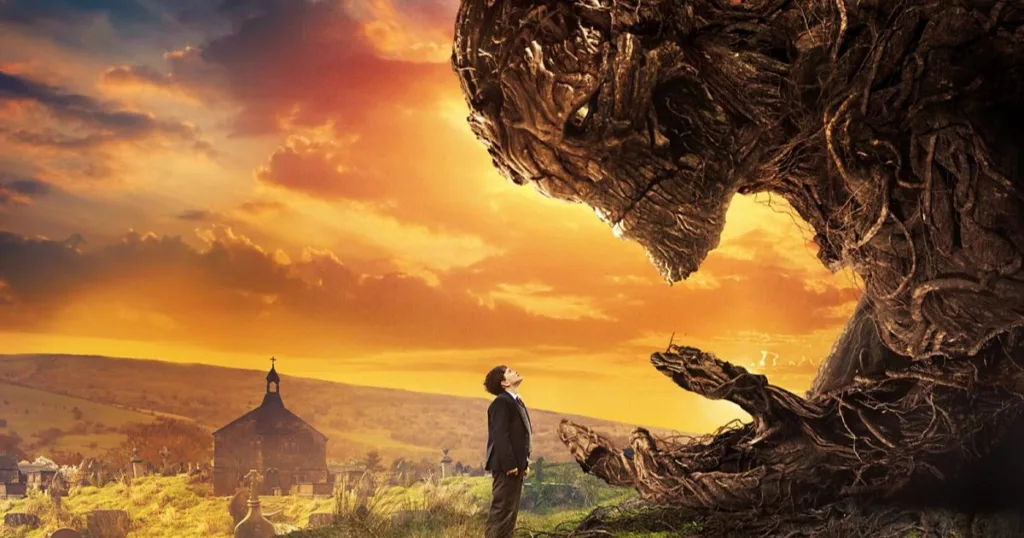
The A Monster Calls 2016 movie tells the story of 13-year-old Conor O’Malley facing his mother’s terminal cancer. He receives an unexpected visitor at exactly 12:07 AM, a giant yew tree transforms into a walking monster who demands to tell him three stories in exchange for Conor’s painful truth. This film, directed by J.A. Bayona, explores grief in ways that most family films avoid, making it one of the most emotionally powerful movies of its generation.
Why A Monster Calls Stands Out from Other Fantasy Films
Unlike typical children’s fantasy movies where imagination provides escapism, this film uses fantasy as a tool for emotional healing. The monster isn’t here to save the day or grant wishes. Instead, it forces Conor to confront feelings he desperately wants to avoid.
The movie earned an 86% rating on Rotten Tomatoes and became known as one of the most effective tearjerkers in recent cinema. What sets it apart is how it handles grief without sugar-coating reality or offering false hope.
The Story: More Than Just a Boy and His Monster
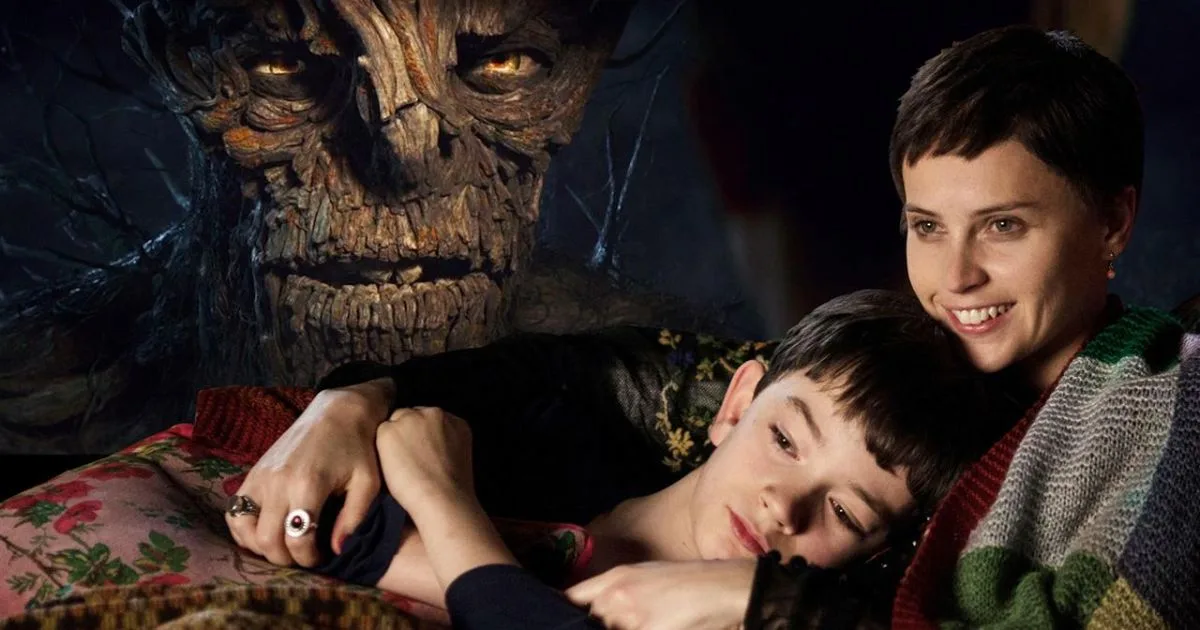
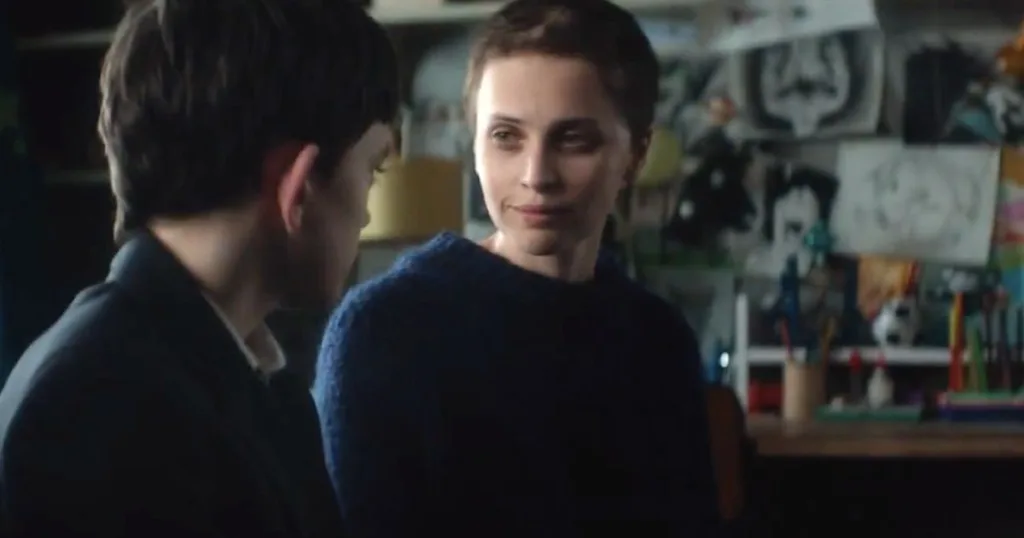
Conor lives in a small British village with his terminally ill mother, portrayed by Felicity Jones. His father has moved to America with a new family, and his strict grandmother, played by Sigourney Weaver, represents everything Conor resists accepting about his future.
At school, bullies target him as “the kid whose mother is dying,” making him feel invisible to everyone except those who torment him. His recurring nightmare shows his mother slipping from his grasp into darkness, but the real nightmare is happening in his waking life.
The yew tree monster, voiced by Liam Neeson, appears not to frighten Conor but to guide him through stories that challenge his understanding of right and wrong. Each tale prepares him for the devastating truth he must eventually acknowledge.
Cast Performances That Earned Critical Acclaim
Lewis MacDougall delivers one of the finest youth performances of 2016 as Conor. The young British actor captures the complexity of a child experiencing anger, embarrassment, and relief alongside profound love. His portrayal feels authentic because it doesn’t shy away from the uncomfortable reality that Conor sometimes wants his mother’s suffering to end.
Liam Neeson brings both menace and warmth to the monster’s voice. The performance required more than voiceover work – Neeson performed all scenes using motion capture technology, lending physical presence to the digital creature. His voice conveys wisdom, power, and surprising gentleness.
Felicity Jones appears frail and weak as Conor’s mother, her makeup and performance reflecting the physical toll of cancer treatment. Despite limited screen time due to her character’s illness, Jones creates an emotionally resonant presence.
Sigourney Weaver plays the grandmother with layers of complexity. Initially appearing cold and disagreeable, she gradually reveals her own grief and fear. Her character represents the adult world’s pragmatic approach to inevitable loss.
Toby Kebbell appears briefly as Conor’s father, bringing charm to a difficult role. He’s the “cool deadbeat dad” whose presence reminds Conor of what might have been while highlighting what is.
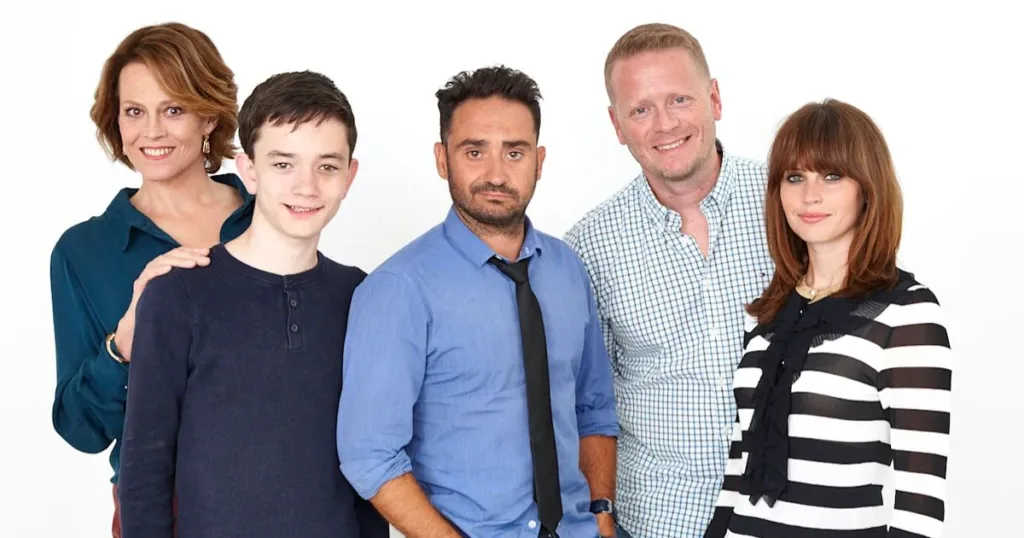
J.A. Bayona’s Vision: Blending Reality with Watercolor Fantasy
Director Juan Antonio Bayona, who previously made The Impossible and The Orphanage, specializes in stories about characters facing overwhelming circumstances. His visual approach distinguishes fantasy from reality through distinct cinematography.
Oscar Faura’s cinematography creates gray, melancholic tones for Conor’s real world. When the monster tells his stories, the film shifts into stunning watercolor animation inspired by Jim Kay’s original book illustrations. These sequences use flowing, painted imagery that feels alive on screen.
The watercolor animation doesn’t just look beautiful – it serves narrative purpose. The stories challenge Conor’s black-and-white thinking about good versus evil, and the fluid animation reflects moral ambiguity. Nothing in these tales is as simple as it first appears.
The Three Stories: Teaching Conor About Complexity
Story One: The Prince and the Witch
The monster’s first tale involves a prince who loved a farmer’s daughter, a queen who died mysteriously, and a witch blamed for murder. Conor expects the witch to be evil and the prince to be good, but the story reveals that the prince actually orchestrated his mother’s death to be with his true love.
This story teaches Conor that people aren’t simply good or evil. Even loving someone doesn’t make you entirely good, and being a villain doesn’t mean you lack humanity.
Story Two: The Apothecary and the Parson
The second tale involves a stingy apothecary whose daughters seek help from a greedy parson. Again, Conor expects clear heroes and villains. Instead, he discovers that belief and greed exist within the same person, and that sometimes no one is entirely right.
This story addresses Conor’s desperate hope that medicine will cure his mother. The yew tree represents both poison and healing – most of the tree is toxic, yet medicine comes from its bark. Hope and despair intertwine.
Story Three: The Invisible Man
The most devastating tale involves a man so determined to be invisible that he actually disappears. This story directly confronts Conor’s desire to escape notice at school and his wish to make his situation disappear.
The invisible man finally takes destructive action to be seen again. This foreshadows Conor’s violent outburst at school, where he beats his bully so severely that it frightens everyone. Finally, people see him – but not as he wished.
The Fourth Story: Conor’s Unbearable Truth
The entire film builds to Conor’s confession. Throughout the movie, viewers know he has a recurring nightmare but don’t know its content. When the monster finally demands Conor’s truth, the revelation is heartbreaking.
Conor’s nightmare shows his mother falling into darkness while he holds her hands. The terrible secret? In the dream, Conor lets go. He wants the nightmare to end, even if it means losing his mother.
This truth fills Conor with shame and guilt. He believes his thoughts are monstrous. The monster teaches him that contradictory feelings are human. You can love someone deeply while simultaneously wanting suffering to end. Relief and grief can coexist.
Why A Monster Calls Resonates with Audiences Facing Loss
The film doesn’t offer comfortable lies about grief. It acknowledges that watching someone die slowly is exhausting and traumatic. It validates that children facing a parent’s terminal illness experience anger, embarrassment, and confusion alongside sadness.
Most movies about dying parents focus on tearful goodbyes and lessons about cherishing every moment. This film dares to show that anticipatory grief is complicated. Conor doesn’t want inspiring life lessons – he wants his mother to be healthy and normal again.
The yew tree symbolism reinforces this complexity. Yew trees grow in graveyards and are associated with death because most of the tree is poisonous. Yet medicine, particularly cancer treatments, can come from yew bark. Death and healing are intertwined, just like Conor’s conflicting emotions.
Comparing A Monster Calls to Similar Films
A Monster Calls vs Bridge to Terabithia
Both films explore how children use fantasy to cope with death, but their approaches differ significantly. Bridge to Terabithia uses fantasy as escapism before tragedy strikes suddenly. The death comes as a shock to both protagonist and audience.
A Monster Calls announces its intentions from the beginning. We know Conor’s mother is dying. Fantasy doesn’t provide escape – instead, the monster uses stories to help Conor process inevitable loss. The focus is preparation and acceptance rather than shock and grief.
Bridge to Terabithia is about processing unexpected loss. A Monster Calls explores anticipatory grief and the gradual approach of death.
Similarities with Where the Wild Things Are
Both films feature angry young protagonists who encounter monstrous creatures that reflect their inner turmoil. Max in Where the Wild Things Are processes childhood frustrations by becoming king of the monsters. Conor learns to understand his emotions through the monster’s guidance.
However, Where the Wild Things Are focuses on typical childhood anger and family tensions. A Monster Calls addresses terminal illness and the fear of abandonment through death. The stakes and emotional weight are considerably heavier.
Connections to Pan’s Labyrinth
Both films share visual effects crew members and use dark fantasy to help children cope with harsh reality. Pan’s Labyrinth set against the Spanish Civil War, while A Monster Calls focuses on personal loss rather than political violence.
Guillermo del Toro’s influence appears in Bayona’s visual style. Both directors understand that fantasy can illuminate truth rather than obscure it. The monsters in both films are neither purely good nor entirely evil.
I Kill Giants: A Closer Comparison
I Kill Giants released in 2017 shares the most obvious parallels. Both feature young protagonists who use fantasy creatures to cope with a parent’s cancer. Both explore how imagination helps process grief while ultimately requiring facing reality.
Readers and viewers often describe I Kill Giants as a blend of Bridge to Terabithia and A Monster Calls. All three films acknowledge that children experience death differently than adults but no less intensely.
The Film’s Visual and Technical Excellence
Animation and Visual Effects
Over 200 drawings were created to visualize the monster in 3D form, staying true to Jim Kay’s original illustrations. The creature combines practical animatronics with digital effects. In many scenes, the monster is an actual physical creation in the tradition of King Kong, making Lewis MacDougall’s interactions feel genuine.
The detailed branches and textures never look fake or overly computerized. The monster feels tangibly present despite being largely computer-generated, because the visual effects prioritize emotional truth over spectacle.
Fernando Velazquez’s Soundtrack
The musical score doesn’t manipulate emotions through overdone dramatic swells. Instead, Velazquez creates a soundscape that supports the story’s emotional journey. The music knows when to fade into silence, allowing performances to speak for themselves.
Critics noted that the soundtrack adds emotional weight without overpowering the narrative. The score understands that sometimes silence is more powerful than music.
Filming Locations in England
The production shot in various UK locations including Manchester, West Yorkshire, and specifically at Colne Valley High School in Linthwaite, Huddersfield. These real British settings ground the fantasy elements in tangible reality.
The church graveyard and yew tree that loom over Conor’s house feel authentically part of the British landscape. The production chose locations that reinforced the story’s themes about death being part of life’s natural cycle.
Patrick Ness: From Page to Screen
Author Patrick Ness adapted his own novel for the screenplay, ensuring the book-to-film adaptation maintained emotional integrity. Ness originally completed the project based on an idea by the late author Siobhan Dowd, who died of cancer at age 47 before she could write the book herself.
This origin story adds poignant context. Dowd conceived the idea while battling terminal illness, and Ness honored her vision by exploring grief with unflinching honesty. The book won both the Carnegie Medal and Kate Greenaway Medal, making it one of the most celebrated young adult novels in recent years.
Ness’s involvement in the screenplay meant the adaptation captured not just plot points but the emotional essence of the book. He understood which elements translated to visual storytelling and how to maintain the novel’s devastating emotional impact.
Target Audience: Who Should Watch This Film?
Age Appropriateness
Common Sense Media rates the film for ages 12 and up, noting that while the PG-13 rating seems appropriate, the emotional content is intense. Young children may find the themes overwhelming. The film works best for middle schoolers, teens, and adults.
Parents should know this isn’t a typical family-friendly fantasy adventure. The film treats young audiences with respect by not talking down or sugar-coating difficult realities. This maturity makes it valuable for families processing grief, but possibly too heavy for younger viewers seeking entertainment.
For Anyone Processing Grief
Regardless of age, viewers dealing with anticipatory grief or recent loss will find the film speaks directly to their experience. Mental health professionals sometimes recommend A Monster Calls for its honest portrayal of grief’s complexity.
The film validates that:
- You can love someone and still feel exhausted by their illness
- Anger is a normal response to unfair situations
- Relief doesn’t mean you didn’t care
- Contradictory emotions can exist simultaneously
- There’s no “right way” to grieve
Critical Reception and Awards Recognition
Box Office Performance
Despite critical acclaim, the film grossed only $47 million worldwide against a $43 million budget. This modest box office performance likely reflects the film’s heavy subject matter and the challenge of marketing an emotionally devastating movie.
Focus Features took a risk producing this film, proving that audiences appreciate sophisticated storytelling even when it doesn’t guarantee commercial success.
Festival Success
The film premiered at the Toronto International Film Festival 2016 to standing ovations. Critics immediately recognized it as something special – a film that respects both young and adult audiences by treating difficult subject matter with honesty and artistry.
Critical Praise
Roger Ebert’s website called it “heart-squeezing and philosophically provocative.” The New York Times described it as “wise, darkly funny and brave.” Many critics noted that while the film made them cry, those tears felt cathartic rather than manipulative.
The Film’s Cultural Impact and Legacy
Conversations About Childhood Grief
A Monster Calls opened important dialogues about how adults discuss death with children. The film challenges the instinct to shield young people from painful truths, suggesting that honest conversations, though difficult, serve children better than protective lies.
Educational Use
Many educators now use the film and book to facilitate discussions about grief, family dynamics, and emotional intelligence. The monster’s stories provide frameworks for discussing moral complexity and the reality that people aren’t simply good or bad.
Influence on Fantasy Filmmaking
The success of A Monster Calls demonstrated that fantasy elements can enhance serious drama rather than diminish it. The film influenced subsequent projects that blend magical realism with difficult real-world issues.
Common Questions About the Film
Is A Monster Calls Appropriate for Young Children?
The PG-13 rating exists for thematic elements rather than violence or language. The film contains one use of “damn” but otherwise avoids profanity. However, the emotional intensity makes it better suited for ages 12 and up. Parents know their children best – some mature 10-year-olds can handle it, while some teenagers might find it overwhelming.
Is This a Horror Movie?
Despite the title and presence of a monster, this is not horror. The monster isn’t scary in the traditional sense. While visually impressive and sometimes intimidating, the creature serves as mentor and guide rather than threat. The true “horror” is the reality of losing a parent, not supernatural elements.
How Faithful Is the Movie to the Book?
Very faithful. Patrick Ness writing the screenplay ensured the adaptation captured the novel’s spirit. The main difference is that visual storytelling allows the animated sequences to expand beyond what readers imagine. The emotional beats remain identical.
Will This Movie Make Me Cry?
Almost certainly. Even strong-willed adults report crying multiple times, particularly during the devastating final act. However, these aren’t manipulative tears – the film earns its emotional moments through honest storytelling rather than sentimental manipulation.
Where Can I Watch A Monster Calls?
Streaming availability varies by region. The film appears on major platforms periodically. Check your local streaming services or consider purchasing the Blu-ray for the best audiovisual experience.
What’s the Monster’s Purpose?
The monster represents Conor’s subconscious mind working through impossible feelings. It appears because Conor needs to confront truth but can’t do it alone. The monster makes visible what Conor keeps invisible – his conflicting emotions about his mother’s approaching death.
Why Does the Monster Tell Those Specific Stories?
Each story challenges Conor’s understanding of morality. He wants clear heroes and villains, good and evil, hope and despair. The stories teach him that life is more complicated. This preparation helps Conor accept that his own feelings aren’t monstrous – they’re human.
Should You Watch the A Monster Calls 2016 Movie?
If you’re seeking movies that explore grief with honesty, the A Monster Calls 2016 movie delivers exactly that. It’s not entertainment that distracts from pain – it’s art that helps process it. The film doesn’t exploit emotion but honors it.
Watch A Monster Calls if you want:
- A beautifully crafted story about love and loss
- Stunning visual storytelling that blends live-action with animation
- Performances that feel genuine and earned
- A film that treats difficult subjects with respect and artistry
- Permission to feel complicated emotions about impossible situations
Skip it if you’re looking for:
- Light family entertainment
- A traditional monster movie
- A feel-good story with a happy ending
- Distraction from life’s difficulties
Final Thoughts: Why This Film Matters
A Monster Calls stands as one of 2016’s most important films because it treats grief as complex rather than simple. It acknowledges that losing someone slowly is different from sudden loss, and that anticipatory grief brings unique challenges.
The film gives permission to feel relief alongside sadness, anger alongside love, exhaustion alongside devotion. It teaches that being human means holding contradictory truths simultaneously.
Most importantly, it reminds us that stories have power. The monster tells Conor that “stories are wild creatures” – when you let them loose, they can wreak havoc or bring healing. This film does both, tearing viewers apart before helping them understand that breaking open is sometimes necessary for healing.
For anyone who has loved someone dying, or who will inevitably face that universal human experience, A Monster Calls offers no false comfort. Instead, it provides something more valuable: the understanding that you’re not alone, your feelings are valid, and somehow, you will survive.
The yew tree monster isn’t really a monster at all. It’s the uncomfortable truth that forces growth, the fierce honesty that pushes us toward acknowledgments we’re not ready to make. Like Conor, we sometimes need that push. That’s what makes this film not just memorable, but transformative.