



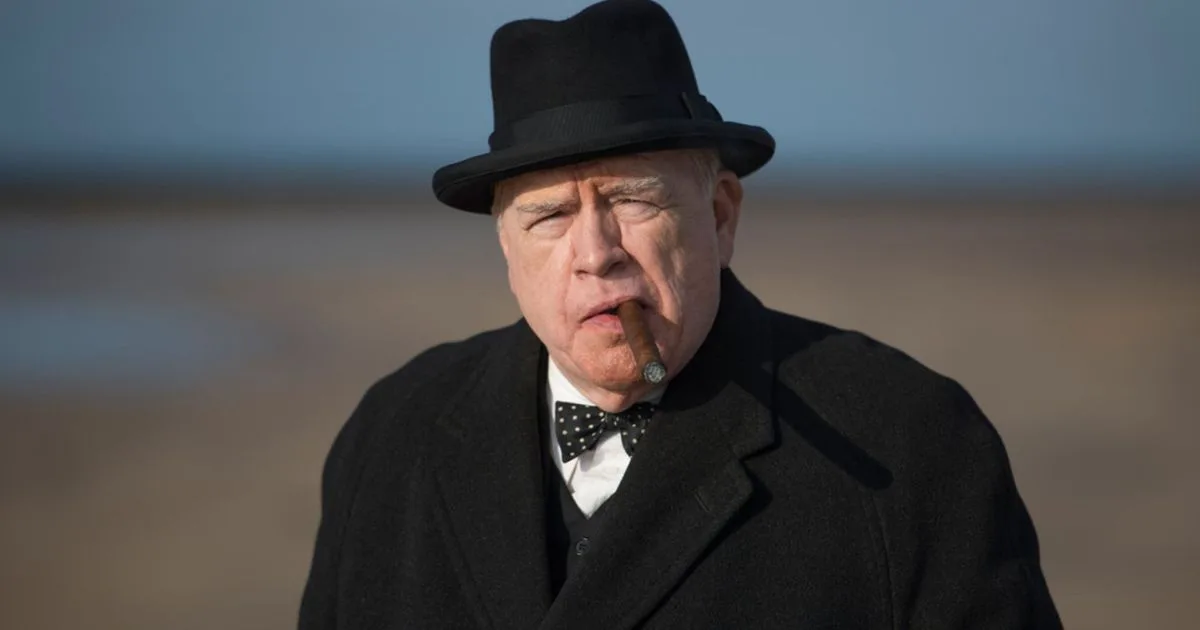
The year 2017 saw two major films about Winston Churchill hit theaters, but while Gary Oldman’s Darkest Hour swept the awards season, Jonathan Teplitzky’s Churchill starring Brian Cox told a dramatically different story. This historical war drama focuses on the 96 hours before D-Day, presenting a Churchill haunted by past failures and desperately opposing Operation Overlord. Unlike traditional war biopics, the 2017 movie Churchill focuses less on battlefield heroics and more on the psychological burden of leadership during the final days before D-Day.
What is Churchill 2017 About?
The Churchill 2017 film centers on June 1-4, 1944, as British Prime Minister Winston Churchill wrestles with his opposition to the Normandy landings. Unlike typical World War 2 movies, this isn’t an action-packed war epic, it’s an intimate character study of a leader paralyzed by fear and memories of the disastrous Gallipoli campaign from World War 1. For viewers expecting a conventional World War II biopic, the 2017 movie Churchill may feel surprisingly restrained, choosing dialogue-driven tension over large-scale battle sequences.
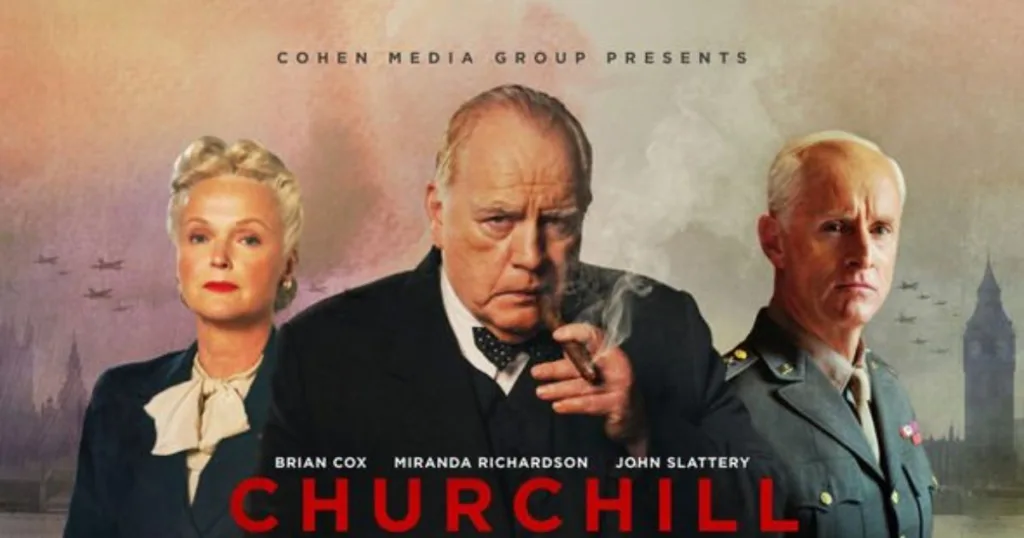
Brian Cox portrays Churchill as obsessed with preventing D-Day, believing it will result in catastrophic casualties on French beaches. The narrative follows his conflicts with General Dwight Eisenhower (John Slattery), his deteriorating relationship with military commanders, and the emotional toll on his marriage to Clementine Churchill (Miranda Richardson). At 105 minutes, this British historical drama strips away the mythology to show Churchill at his most vulnerable and controversial.
Cast and Performances
Brian Cox delivers what critics universally praised as the film’s standout element. At 70 years old during filming (the same age as Churchill during D-Day), Cox brings naturalistic gravitas to the role. Unlike Gary Oldman’s transformation through extensive prosthetics in Darkest Hour, Cox relies primarily on performance. Rolling Stone called it “a master class in acting,” while Time Out described him as “rudely magnificent.”
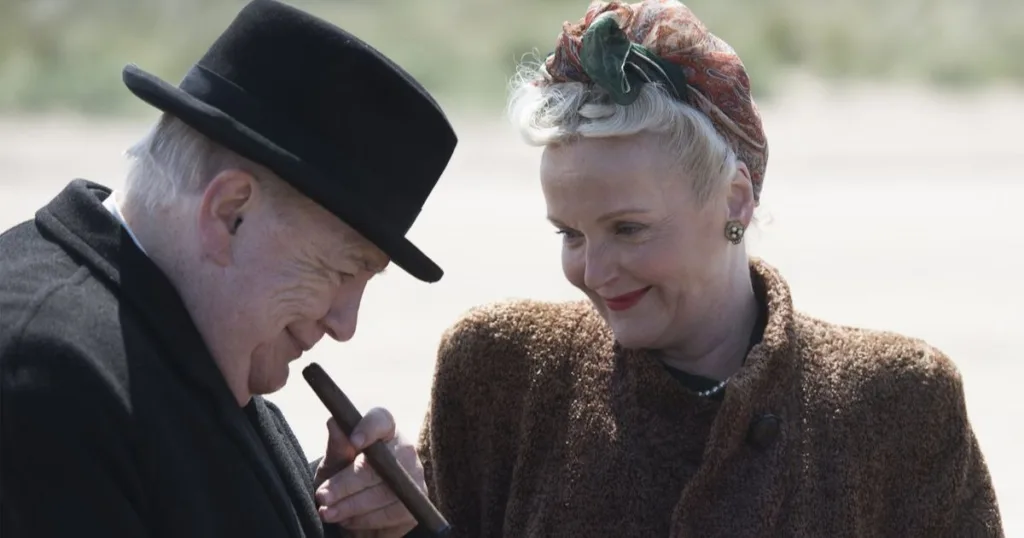
Miranda Richardson as Clementine Churchill provides the film’s emotional anchor. Her portrayal captures a wife managing both political crisis and her husband’s psychological demons. Their on-screen chemistry makes the Churchill marriage feel authentic and lived-in.
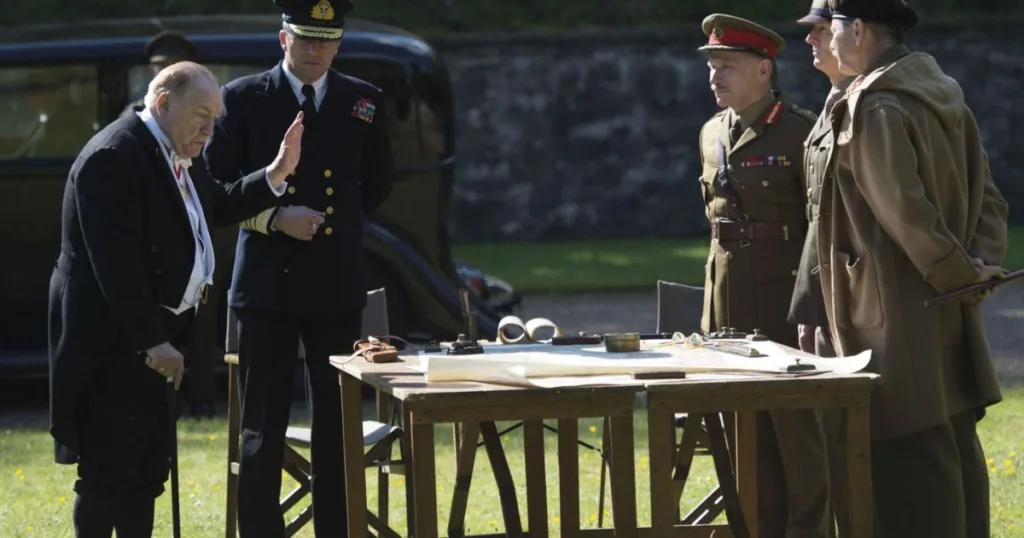
John Slattery, known from Mad Men, plays General Dwight D. Eisenhower. While some critics noted he doesn’t physically resemble Eisenhower, his calm authority provides effective counterpoint to Cox’s emotional Churchill. The supporting cast includes:
- Ella Purnell as Helen Garrett, Churchill’s secretary
- James Purefoy as King George VI
- Danny Webb as Field Marshal Bernard Montgomery
- Julian Wadham in a small role
Behind the camera, Jonathan Teplitzky (The Railway Man) directed from a screenplay by historian Alex von Tunzelmann.
Critical Reception: Mixed Reviews and Controversy
The Churchill movie rating tells a story of divided opinion. On Rotten Tomatoes, the film earned just 43% from critics, with the consensus reading: “Churchill gets sterling work out of Brian Cox in the leading role, but it isn’t enough to overcome a muddled and ultimately unsuccessful approach to an incredible real-life story.” Metacritic assigned it 44/100, indicating “mixed or average reviews.”
What Critics Praised:
- Brian Cox’s commanding performance
- Miranda Richardson’s supporting work
- Cinematography by David Higgs
- Willingness to show Churchill’s vulnerabilities
What Critics Criticized:
- Repetitive, melodramatic tone
- Historical inaccuracies (see below)
- Slow pacing with excessive talking
- Low budget showing in production value
- Strange tonal shifts between comedy and drama
Roger Ebert’s site called it “uniquely awful” and “utter rubbish,” with critic Godfrey Cheshire writing that the film “completely misrepresents the historical record.” The Hollywood Reporter termed it “pedestrian” with “too many monodimensional characters.”
The Historical Accuracy Controversy
The biggest Churchill movie controversy surrounds its historical accuracy. Prominent Churchill biographer Andrew Roberts gave a scathing review, writing: “The only problem with the movie is that it gets absolutely everything wrong. Never in the course of movie-making have so many specious errors been made in so long a film by so few writers.”
Historical Errors According to Experts:
- D-Day Opposition Exaggerated: While Churchill did express concerns about Operation Overlord in 1942-1943, by June 1944 he was fully committed to the invasion. The film portrays him as actively trying to sabotage D-Day, which historians say is false.
- Churchill’s Character: The film depicts him as “weak, dithering, bumbling-incompetent,” which contradicts historical records showing decisive leadership during this period.
- Relationship with Clementine: The marital strife shown has no basis in fact according to Roberts.
- Anti-American Portrayal: Churchill is shown as anti-American, which historians dispute.
- The Beach Scene: The opening showing Churchill on a beach seeing blood-red waves and bodies is pure invention, though it effectively visualizes his Gallipoli trauma.
Screenwriter Alex von Tunzelmann, herself a historian, defended the film’s interpretation, arguing it captures Churchill’s genuine psychological state even if specific events are dramatized. This defense didn’t satisfy historians who felt the film crossed from dramatic license into character assassination.
Churchill vs Darkest Hour: The 2017 Double Feature
2017’s coincidental release of two Churchill biographical films invites natural comparison. While both are well-acted period pieces, they couldn’t be more different in approach and reception.
Timeline Difference:
- Darkest Hour (May 1940): Churchill’s first weeks as Prime Minister during Dunkirk evacuation
- Churchill (June 1944): Final days before D-Day invasion, four years later
Tone and Approach:
- Darkest Hour: Inspirational, celebrating Churchill rising to meet destiny
- Churchill: Critical, showing Churchill fighting against military consensus
Performance Style:
- Gary Oldman: Transformative, theatrical, larger-than-life (won Oscar)
- Brian Cox: Naturalistic, subdued, internalized (praised but not awarded)
Budget and Success:
- Darkest Hour: $30 million budget, $150 million box office, 84% Rotten Tomatoes
- Churchill: $10 million budget, $5 million box office, 43% Rotten Tomatoes
Historical Accuracy:
- Darkest Hour: Takes liberties but stays within acceptable dramatic bounds
- Churchill: Accused of fundamentally misrepresenting Churchill’s position
For those exploring the best Churchill movies, Darkest Hour clearly won both critical and commercial success. However, Churchill offers a counterpoint worth considering—showing leadership doubt rather than certainty. Watched together, they provide complementary portraits: one Churchill triumphant, one Churchill tormented.
Where to Watch Churchill 2017
Finding where to watch Churchill 2017 depends on your location and platform preferences.
Streaming Options:
- Churchill Netflix: Availability varies by region; check your local Netflix
- Churchill Amazon Prime: Available for rental ($3.99-$4.99) or purchase ($9.99-$14.99) in most regions
- Other platforms: May appear on Paramount+, Hulu, or regional streaming services
Digital Rental/Purchase:
- iTunes, Google Play Movies, Vudu, Microsoft Store typically offer both rental and purchase options
- Rental: Usually $3.99-$4.99 for 48-hour access
- Purchase: Typically $9.99-$14.99 for permanent digital ownership
Physical Media:
- DVD and Blu-ray available through Amazon, Best Buy, and specialty retailers
- Physical copies often include bonus features like behind-the-scenes footage
Availability Note: Streaming rights change frequently. Check JustWatch.com or similar services for current availability in your country before attempting to watch Churchill 2017 online.
Themes and Deeper Meaning
Despite its historical controversies, the Churchill war drama explores several thought-provoking themes:
Trauma and Leadership: The film’s central question asks how past failures influence present decisions. Churchill’s Gallipoli trauma creates a lens through which he views all military operations. While historians dispute whether this actually paralyzed his D-Day judgment, the psychological exploration resonates.
The Burden of Command: What does it mean to send thousands to probable death? The film presents Churchill’s anguish over potential casualties as fundamentally human, even if the specific opposition is historically questionable.
Marriage as Stabilizing Force: The Churchill Clementine relationship provides emotional grounding. Richardson’s performance shows a partner who must simultaneously support her husband and challenge his destructive patterns.
Authority vs Expertise: When should political leaders defer to military experts? The film raises this question through Churchill’s conflict with Eisenhower, though the historical inaccuracy undermines the debate’s legitimacy.
Why the Film Failed Critically and Commercially
Several factors contributed to Churchill 2017’s disappointing performance:
- Timing: Released same year as the superior Darkest Hour, inviting unfavorable comparisons
- Historical Backlash: Prominent historians publicly attacking the film’s accuracy damaged credibility
- Repetitive Structure: Critics found the “Churchill rants against D-Day” scenes monotonous
- Melodramatic Tone: Variety called it “overly melodramatic,” with 90% of scenes shot like “the fate of the universe” hangs in balance
- Budget Limitations: The $10 million budget shows in production values, especially compared to lavish period pieces
- Marketing Challenges: How do you market a film showing a beloved historical figure as dithering and incompetent?
- Pacing Issues: A 105-minute film about four days of conversations doesn’t generate much momentum
What Works Despite the Flaws
Even critics who disliked the Churchill film acknowledged certain strengths:
Brian Cox’s Performance: Universally praised, with even harsh reviewers singling out his work. Cox captures Churchill’s physical presence and vocal patterns without caricature.
Cinematography: David Higgs creates painterly compositions with muted colors and dramatic lighting that evoke the period effectively.
Willingness to Humanize: In an era of hagiographic biopics, showing a flawed, frightened Churchill offers refreshing honesty—even if taken too far.
Miranda Richardson: Her Clementine provides the film’s emotional truth, grounding Cox’s more theatrical moments.
Opening Beach Sequence: While historically invented, the blood-red waves and ghostly bodies powerfully visualize psychological trauma.
Frequently Asked Questions About Churchill 2017
Is Churchill 2017 historically accurate?
No. Prominent historians including Andrew Roberts have documented numerous historical errors. While Churchill did express concerns about D-Day casualties, by June 1944 he supported the operation and didn’t attempt to sabotage it as the film suggests.
How does it compare to Darkest Hour?
Darkest Hour is superior in most respects—better reviews (84% vs 43%), higher budget, Oscar wins, and greater historical accuracy. However, Churchill offers a different perspective on leadership doubt that some viewers may find interesting.
Is Brian Cox good as Churchill?
Yes. Even critics who hated the film praised Cox’s performance as “a master class in acting.” He captures Churchill’s physical presence and voice without resorting to caricature.
Did Churchill really oppose D-Day?
Churchill had concerns about D-Day casualties and had opposed earlier invasion plans in 1942-43. However, by June 1944 he was committed to Operation Overlord and didn’t try to stop it as dramatically as the film depicts.
What is the Gallipoli connection?
Churchill championed the Gallipoli Campaign in World War 1, which resulted in massive casualties and nearly ended his career. The film suggests this trauma made him oppose D-Day, though historians dispute the extent of this psychological impact on his 1944 decision-making.
Why did the film flop at the box office?
Multiple factors: poor critical reception, historical controversy, competition from Darkest Hour, and limited marketing budget. It earned only $5 million worldwide against a $10 million budget.
What’s the film’s runtime?
105 minutes (1 hour 45 minutes).
What is the movie rated?
PG in the UK for infrequent strong language and mild violence. US rating varies but generally PG-13 equivalent.
Should I watch this or Darkest Hour?
Most viewers should watch Darkest Hour, which is the better, more historically accurate film. Watch Churchill only if you’re particularly interested in Brian Cox’s performance or want to see a more critical take on Churchill’s wartime leadership.
Does the film show D-Day battle scenes?
No. The entire film takes place before D-Day, focusing on political and psychological drama rather than combat. This disappointed many viewers expecting war action.
Final Verdict: A Flawed but Interesting Failure
The Churchill 2017 movie stands as a well-intentioned misfire. Brian Cox delivers exceptional work in the lead role, and the film’s willingness to show Churchill as fallible and frightened deserves credit. However, the historical inaccuracies undermine the entire premise, turning what could have been insightful psychological drama into what historians view as character assassination.
For Brian Cox Churchill admirers, the film offers a chance to watch a master actor work. For history buffs, it provides a case study in how dramatic license can cross into historical fiction. For general audiences seeking a Churchill biopic, Darkest Hour remains the better choice.
The film serves as a reminder that biographical dramas must balance artistic vision with historical responsibility. When Alex von Tunzelmann’s screenplay took liberties with Churchill’s D-Day opposition, it created a false premise that no amount of quality acting could salvage.
For more movie insights and reviews, visit our Home page.
Rating Summary:
- Performance: 8/10 (Brian Cox excellence)
- Historical Accuracy: 2/10 (major errors)
- Entertainment Value: 5/10 (slow but watchable)
- Overall: 5/10 (interesting failure)
Whether you watch Churchill 2017 depends on your priorities. If you value accurate historical drama, skip it. If you appreciate great acting regardless of script quality, Cox’s performance merits viewing. Either way, understanding its flaws and controversies helps frame expectations appropriately.
For those seeking the definitive Churchill World War 2 movie, the search continues beyond both 2017 offerings, perhaps waiting for a film that combines Darkest Hour’s inspiration with Churchill’s willingness to show complexity, all grounded in historical fact rather than dramatic invention.